A few years ago a graphic designer could not type a prompt and get, within seconds, an image that until then existed only in their head. There was no generative fill, no quick image expansion, no ten versions of one idea produced in a few seconds. To me that sounds slightly abstract, because I am entering the industry at a moment when AI in graphic design is already completely normal.
I do not give much thought to using AI for research, for finding a direction, or for creating an element that does not exist on stock. I simply treat these tools as another part of the process, alongside Illustrator, Photoshop or Figma. And that is exactly why I started to wonder: what was design actually like before AI?
Rather than guess, I asked Abigail, a graphic designer at Brandkick who knows the work both before AI arrived and after.

WHAT DID THE DESIGN PROCESS LOOK LIKE WITHOUT AI?
Today, while working on a project, I can test several different directions within minutes. Generate a reference, change the surroundings in a photo, extend a frame, or simply ask AI for the associations I will start my research from. Earlier that process had to look completely different, because if you needed a specific photo, you had to find it, take it yourself, or build it from the materials available.
What did your design process look like before AI tools for designers became commonplace? Where did you start, and where did you usually look for materials or inspiration?
Honestly, I have already forgotten what the world was like without AI, even though it was not that long ago, so I need a moment to think :) …I shaped my visual sense by observing designers who genuinely influenced Polish and global design. A lot of inspiration and fresh perspective also came from in-person events for designers (Dribbble WroMeetup, I Design Meets or Wrocław Service Jam). I found references — and still find them — on Pinterest or Awwwards, less often on Behance or Instagram. Research back then meant manually searching for competing brands or projects, or analysing the structure of selected websites myself, and it could take me 3-5 hours, sometimes more. Finding the right font, in my case, meant browsing the entire library and trying things on. Fortunately, today I already have a collection of a few I trust.
Sourcing materials was even harder. Looking for the right photos or illustrations could take hours, sometimes nothing came of it, and low-quality materials received from a client often simply could not be saved. You had to work with what was available, or find other ways to realise your vision.
– Abigail Frączek
WHAT HAS AI IN GRAPHIC DESIGN REALLY CHANGED?
When people talk about artificial intelligence in design, it is easy to reduce the topic to generating images. In my case, however, AI in graphic design often appears much earlier, before I start designing anything at all. I can use it for research, to organise a brief, to develop a few associations, or to find a different approach to a problem. So it happens that the final project contains no generated element whatsoever, and yet artificial intelligence was part of the whole process.
At which point in your work do you use AI most often today? Has it replaced a stage you used to handle differently?
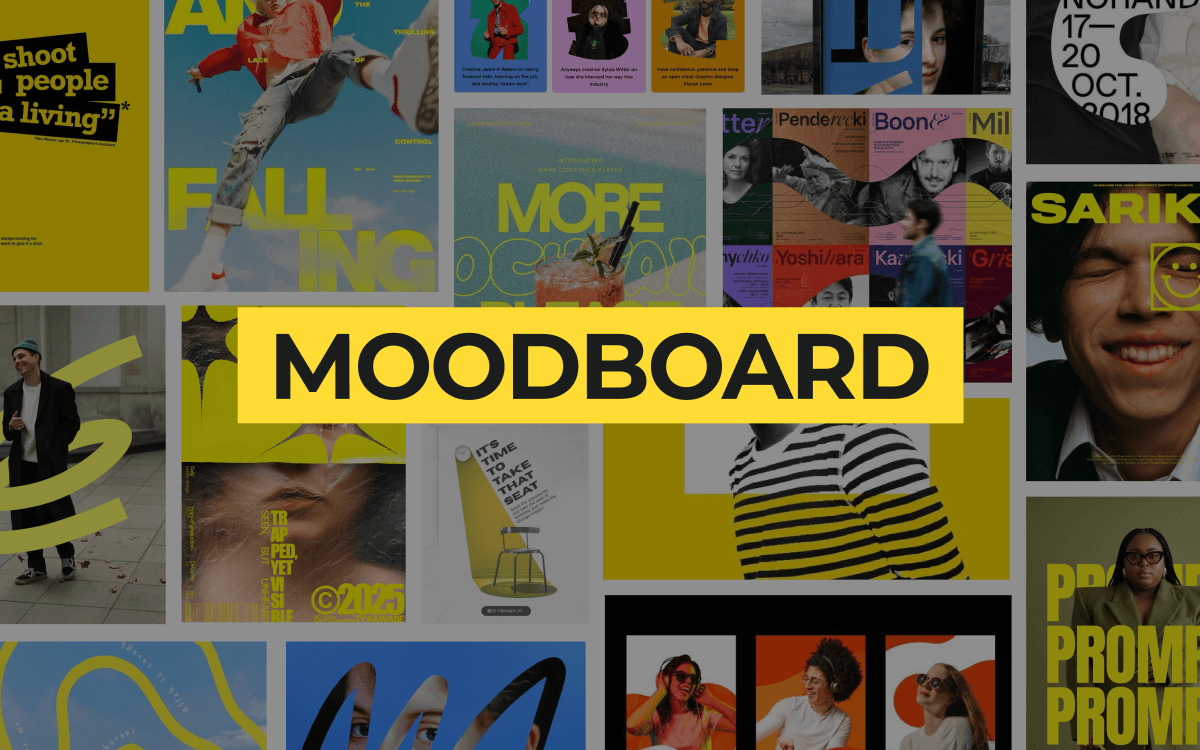
Today research is much faster and, instead of 3-5 hours, it often takes me around an hour. With ChatGPT I review the industry and build website architectures, and although I do not use AI to create moodboards for me, the smart algorithms on Pinterest help me quickly build a base of inspiration. If I am lost in the early phase of a project, I generate a sketch of a given vision to check whether it is a good enough idea to be worth the time of my manual work.
The biggest change I see is in working with materials. AI gave me control over their quality — I can fix weak files, extend them, or create something from scratch in a short time. That makes me more independent from the materials a client delivers. I still believe, though, that real photo shoots and hand-drawn illustrations work far better in branding.
– Abigail Frączek
MORE OPTIONS, MORE DECISIONS
There is, however, another side to this convenience. The problem used to be that finding the right material took too long. Today the problem is sometimes the opposite, because there are simply too many possibilities. If something does not work for me, I can generate another version, then another, change the frame, the light, the composition or the style. Graphic design with AI gives a lot of freedom, but it does not make the decisions for us.
Does AI make it easier for you to reach the final concept, or does the abundance of options sometimes make the decision harder?
“AI can help sketch out a direction faster and test different possibilities, but for a beginner designer, an excess can be damaging. When I was starting out, my eyes were not yet sufficiently trained in optics or colour combinations, and my aesthetic sense did not yet let me define character and visual direction so consciously — and we learn those fundamental skills over the years, so they should not be handed over to AI.”
– Abigail Frączek
WHAT AI STILL WILL NOT DO FOR A DESIGNER
This is probably the part that has changed least over recent years. Whether you look for inspiration on Behance, in books, on stock, or with the help of artificial intelligence, in the end the project still has to answer a specific problem.
It has to fit the brand, reach the right group, and work in the place where it will be used. It should also have some reason to look exactly the way it does. Access to ever better tools does not by itself give you the ability to make those decisions.
In your view, what remains the most important skill for a designer, regardless of how AI develops?
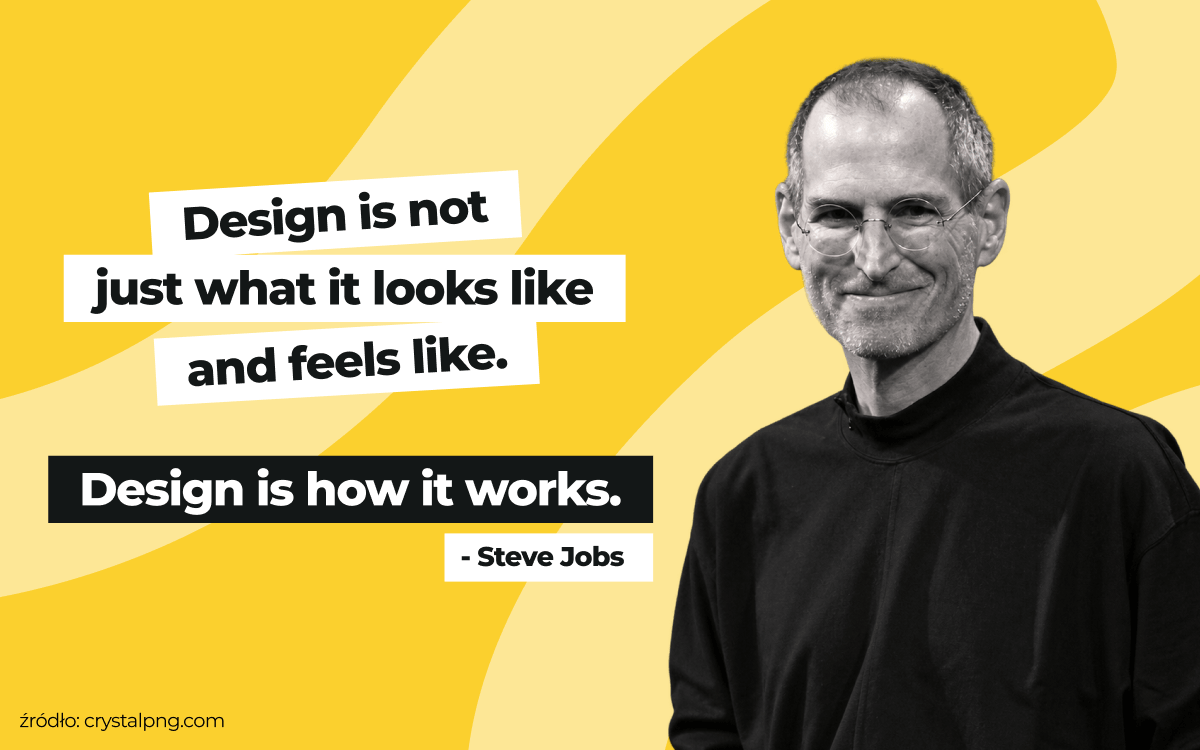
“Here I completely agree with you — the designer's main goal is to make the project work the way the client, or we ourselves, intended. As Steve Jobs put it so well: „Design is not just what it looks like and feels like. Design is how it works”. The ability to make conscious design decisions is acquired over years, which is why the means to reach a given goal should stay under our control.This is probably the thing that, as a beginner designer, I am only starting to truly understand. You can learn the software, just as you can learn new tools and features, which a year from now will probably look completely different anyway. It is far harder to learn to judge whether a project really is a good solution to a specific problem.”
– Abigail Frączek
SO — WAS DESIGN BETTER BEFORE AI, OR NOW?
After this conversation I am not sure the question can be answered in a single sentence at all. The work used to require more patience and more improvising with whatever was available. Today artificial intelligence in design lets you test ideas very quickly that once would have taken far more time.
At the same time, speed does not always mean a better result. I have the impression that the biggest change AI in graphic design brought is not the ability to create an image from a few words, but the shortening of the distance between an idea and its first visualisation.
Some ideas used to stay in your head, because testing them took too much work. Today it is much easier to say „what if we did it like this?” and then actually see, a moment later, whether that direction makes sense.
And perhaps that is exactly why the designer's role is not becoming less important. Because when almost anything can be tested, it becomes even more important to know what is actually worth testing.