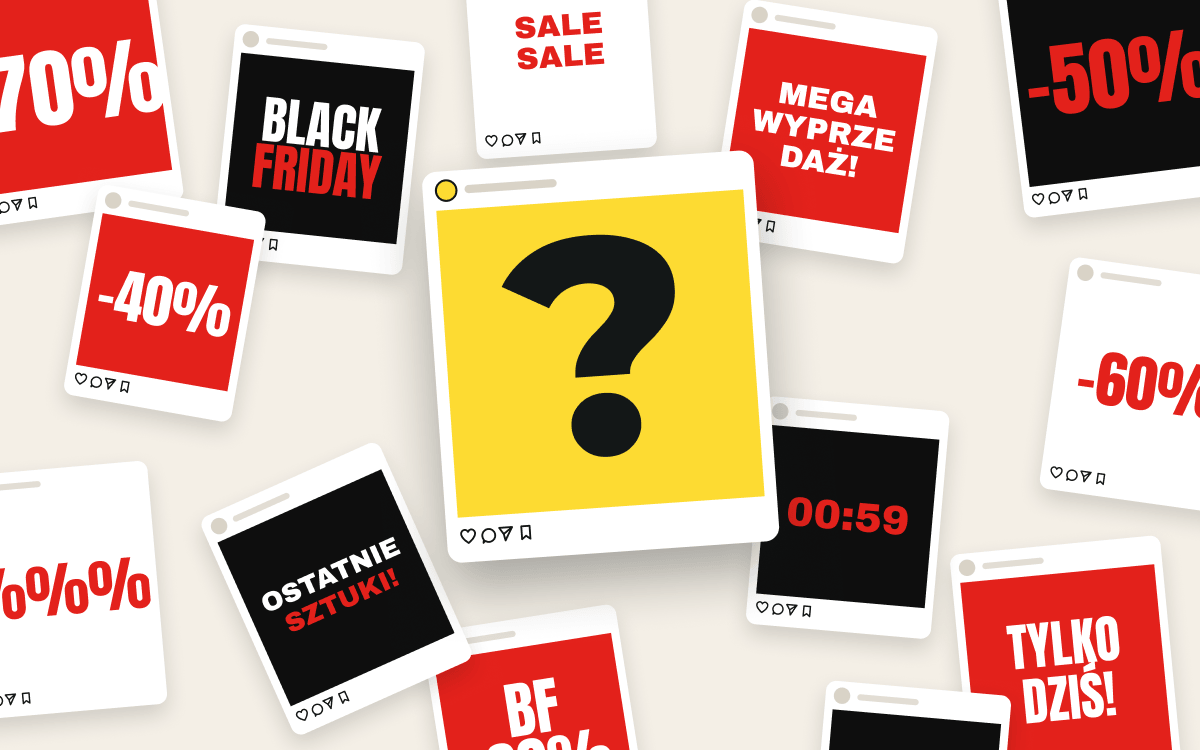
For years, the last Friday of November has looked much the same online. Inboxes fill up with offers, the Instagram feed turns into a string of red banners shouting “SALE UP TO -70%”, and ads follow us from one app to the next. Black Friday stopped being a single shopping day a long time ago. Today it is more like a whole season that starts well before Friday and only ends after Cyber Monday.
For brands it is a huge opportunity, but also a test. When almost everyone runs a promotion, a discount alone no longer stands out. Who gets noticed depends on what happens earlier: the plan, the prepared communication and an image the audience recognises in a crowd of similar offers. In this post we show how we look at a Black Friday campaign from a marketing perspective and where to start, so that next year you can approach it calmly rather than at the last minute.
How is Black Friday different from Cyber Monday, and does my brand need both?
Black Friday falls on the Friday after American Thanksgiving, so always at the end of November. It is the day with the widest reach – it covers both online and brick-and-mortar shops, and customers often treat it as the moment for bigger purchases they have been putting off. Cyber Monday falls on the Monday after Black Friday and has been an online shopping holiday from the start. For many people it is a second chance to buy a product they missed, or to make a decision they postponed all weekend.
Not every brand has to be active on both days. An approach where both dates are parts of one campaign often works better – with Friday as the main push and Monday as the close. Cyber Monday can also be used differently, for example as a special offer only for followers, newsletter subscribers or people who left a product in their cart. That way Monday is not a repeat of Friday, but something special.
When should you start preparing for Black Friday?
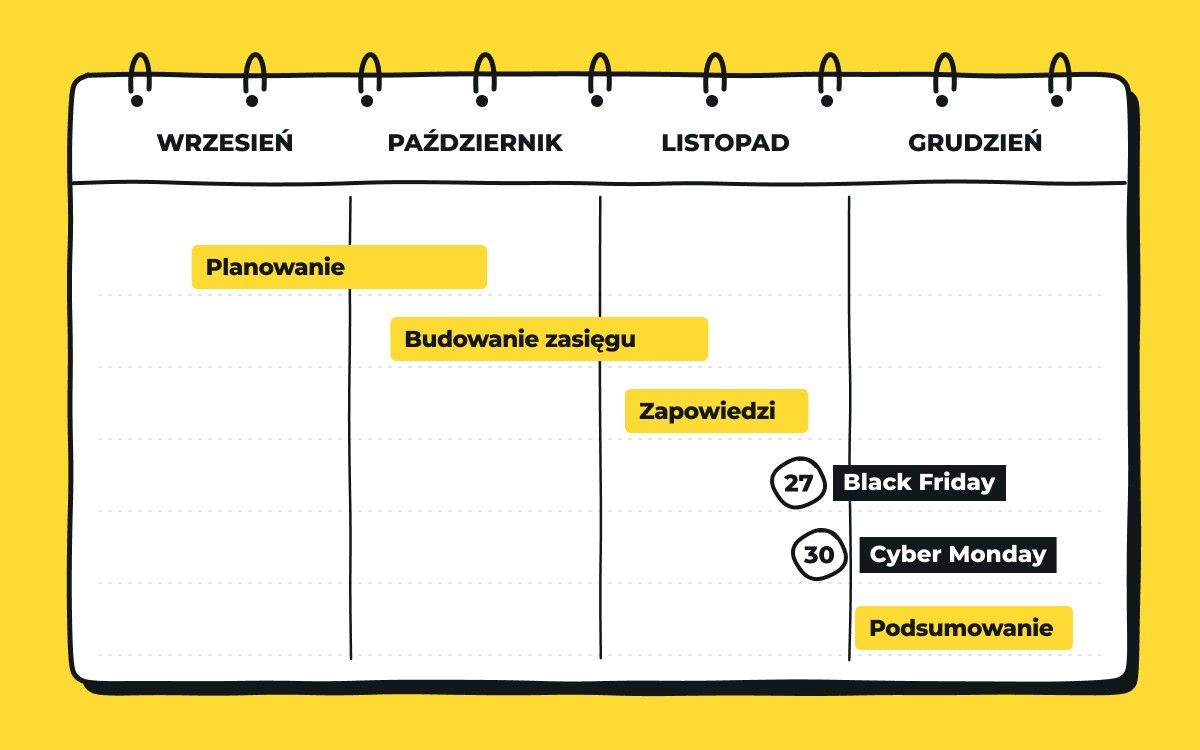
Earlier than most brands think. The campaign a customer sees in the last week of November is the result of work from the previous months. Around September and October it is worth setting your goals – whether it is sales, new customers or newsletter sign-ups – as well as the budget and the offer itself. It is also a good moment to check whether your website and shop can handle the increased traffic.
Then comes the stage that is easiest to skip, yet makes the biggest difference: building reach and community before any promotion appears. In November the competition for attention grows, and with it ad costs. A brand that enters this period with engaged followers and remarketing audiences ready pays less to reach people who are genuinely interested in the offer.
A few weeks before Black Friday it is time for teasers, then the peak of the campaign, and finally the Cyber Monday encore and post-campaign communication. Mapping these stages in a calendar as early as September helps you avoid a situation where graphics are made overnight between Thursday and Friday.
Do you have to offer a discount on Black Friday?
No. A discount is the simplest solution, but not the best one for every brand. A company positioned as premium that cuts its prices by half every year teaches customers that it is enough to wait until November. Over time this can weaken the perceived value of the products and the image built all year round. So what can replace price cuts? There are plenty of alternatives. You can add a free gift to the order, prepare a limited set, donate part of the proceeds to charity or give loyal customers early access to a new collection. Black Friday promotions like these still give people a reason to buy, but they do not reduce the whole conversation to price.
How to use social media in a Black Friday campaign?
This is the area where the difference between a planned and an improvised campaign shows most often. Black Friday on social media starts with a publishing calendar: when the first teaser appears, when the countdown starts, at what moment the offer is revealed and how we remind people about it as the promotion comes to an end. A well-planned schedule keeps interest going for several weeks instead of relying on a single post.
Which formats work best?
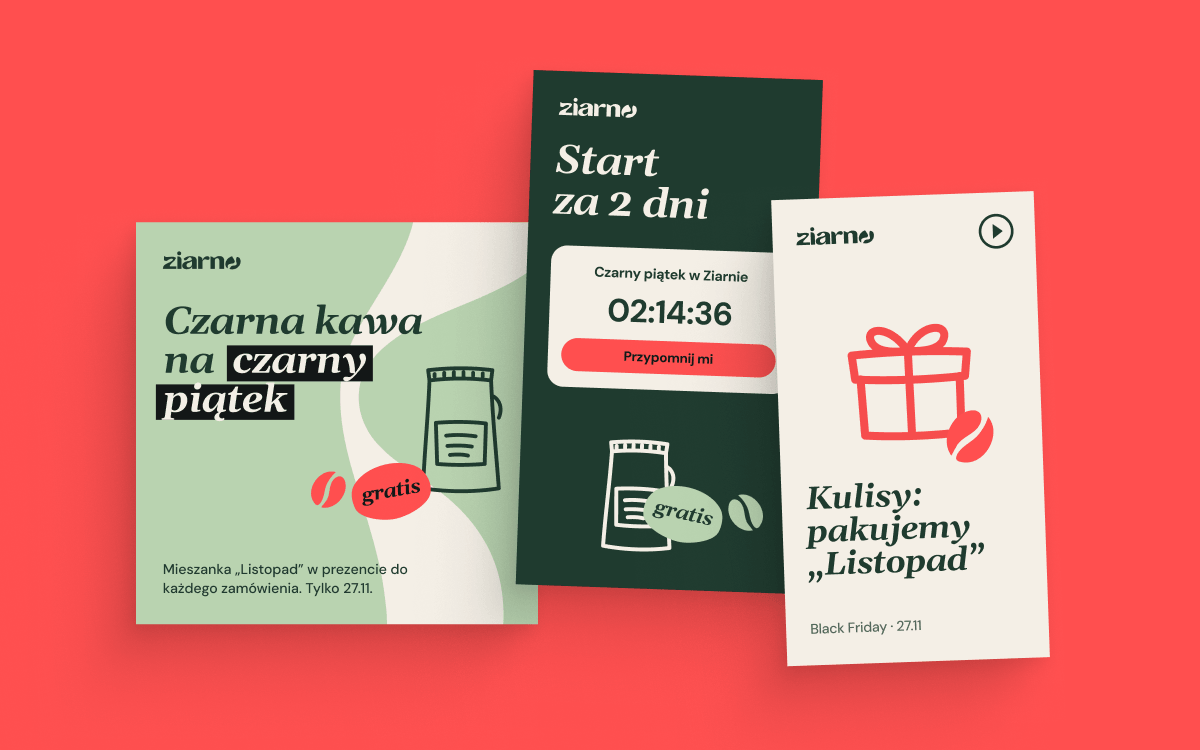
Reels help show the product in use quickly and reach new people. Stories with a countdown sticker remind people of the promotion's start, and carousels present the offer well when there are more products. A live stream, in turn, can turn the start of the promotion into an event – with a showcase of new products, answers to questions and an offer only for viewers.
How to stand out in a flood of similar ads?
In November the feed fills up with almost identical graphics: black, red and big percentages. That is why a consistent campaign key visual that stays in line with the brand identity is so important. The audience should recognise whose offer it is before they even read the text. The tone of communication helps too – humour, expert advice or a behind-the-scenes look at the preparations can grab attention more effectively than yet another “mega sale” banner.
What role do paid campaigns play?
During this period it is worth basing paid campaigns on audiences the brand has built earlier – people who visited the website, watched videos or engaged with posts. Remarketing to these people usually works better than broad campaigns to completely new audiences at a time when ad costs are at their highest. Collaborations with creators and individual discount codes can complement this, and they also let you check which channel actually drove sales. Keep in mind, though, that during Black Friday both UGC and influencer rates will be higher than usual.
Beyond social media: website, content and SEO
Even the best social media campaign loses effectiveness if it leads to an empty page or to a checkout process with five steps. Before Black Friday it is worth checking loading speed, the mobile version and the ordering process – ideally long before traffic increases.
It is also worth thinking about content that appears before the offer itself – gift guides, product comparisons or answers to questions customers ask before buying. Published in advance, it has time to gain visibility in Google and in AI-generated answers, and so bring in visitors right when they start looking for deals.
Cyber Monday at Brandkick
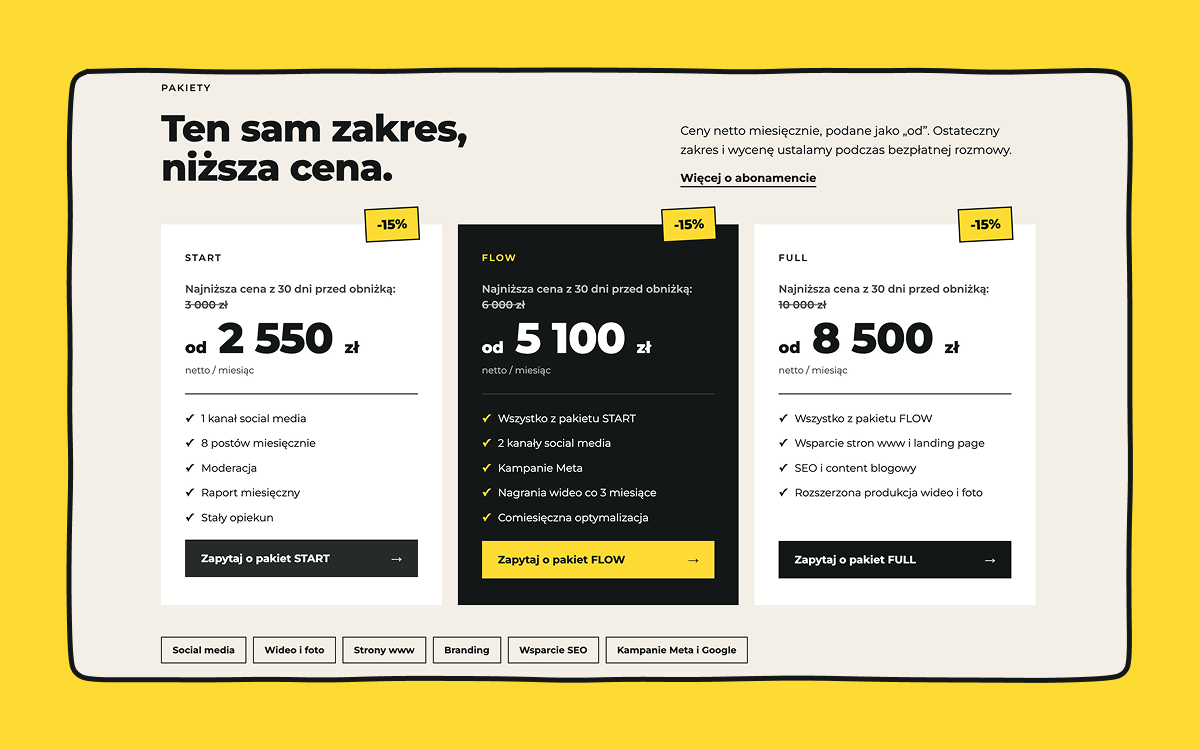
If you want to prepare well in advance for next year's Black Friday campaign, we have something for you for Cyber Monday. On this occasion, all our subscription packages are 15% cheaper for the first 3 months of cooperation! It is a good moment to enter the new year with your communication in order, instead of returning to it only before the next seasonal campaign.
We work in a subscription model. Instead of commissioning graphics, video, campaigns and your website separately, you get one team that takes care of your brand every month for a fixed fee. Depending on your needs, this can include social media management, content production, Meta and Google campaigns, website support, SEO or branding. All you need to do is choose one of three packages: START, FLOW or FULL, which differ in scope. You can find more of our services HERE.
Where to start planning next year's campaign?
By looking at what the brand already has: its community, its website and the results of previous campaigns. Black Friday and Cyber Monday are a few days that show the results of a whole year's work, not just the last week of November. A brand that talks to its audience regularly, has a recognisable image and a plan prepared in advance does not need to shout the loudest to be noticed. It is enough that, in a crowd of similar offers, the audience knows straight away that this one is theirs.
If you want to prepare your Black Friday social media campaign in advance – from strategy and a publishing calendar, through graphics and video, to paid campaigns – let's talk. At Brandkick we will gladly help you plan it so that November becomes an opportunity for your brand rather than a rush. Let's start from the beginning and get your brand ready for the next Black Friday together!